The short answer
Most people should get the
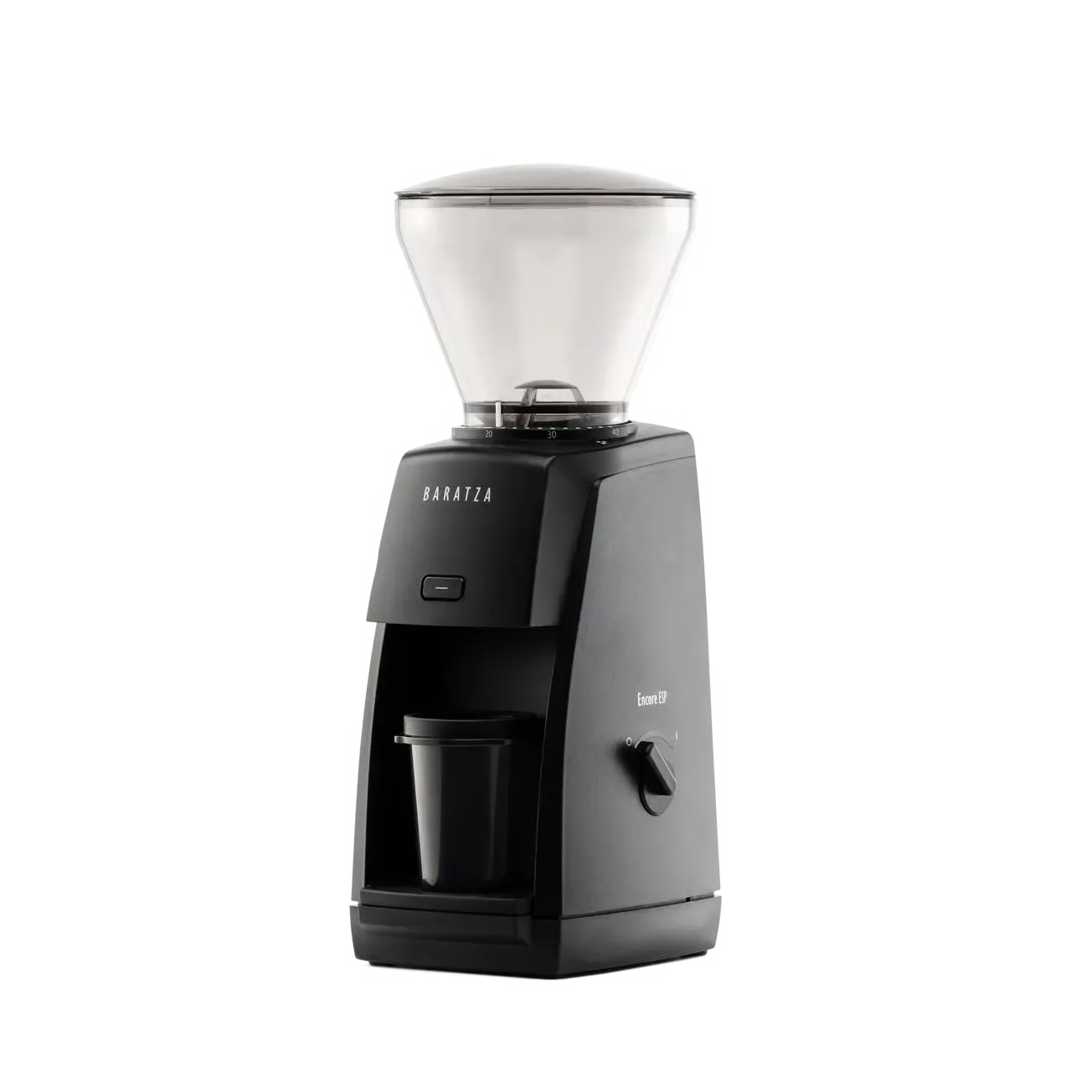
Baratza Encore ESP. It is easier
to dial in for espresso, Baratza sells every part to repair it and it
grinds just as well for filter coffee. Choose the
Fellow Opus if you single dose,
change beans often and want less static and mess on the counter.
How we compared them
We compared the makers’ published specs with detailed reviews from
CoffeeGeek, Prima Coffee and Seattle Coffee Gear, and with long-term owner
feedback. We did not test the grinders ourselves, so the differences below
come from the manufacturers and those reviewers.
Where they differ
Grind adjustment
The Encore ESP splits its 40 settings in two. Settings 1 to 20 move in fine
steps of about 20 microns for espresso, and settings 21 to 40 move in
larger steps of about 90 microns for drip, pour-over and French press. You
turn the hopper to change it. The Opus has 41 even steps of about 50
microns on its outer ring, plus an inner micro adjustment for espresso.
CoffeeGeek found only two or three usable espresso steps on the outer ring
and called the inner adjustment confusing, while Prima Coffee found the
Encore ESP easier to dial in.
Hopper and workflow
The Encore ESP has a classic tall hopper, an on and off switch and a pulse
button. You can fill it and grind on demand, or weigh single doses. The
Opus is built around single dosing. Its lid doubles as a measuring cup and
its button runs a timer of 30, 60 or 90 seconds, so it stops on its own.
If you keep one bag of beans in the hopper, the Encore ESP is simpler. If
you weigh each dose and switch coffees, the Opus fits better.
Static and clumping
The Opus has an ion generator that runs while it grinds to cut static, so
fewer grounds cling to the cup and chute. Prima Coffee found the Encore ESP
produces more clumps at espresso settings and suggests stirring the grounds
in the basket with a distribution tool.
Motor speed
The Encore ESP’s DC motor turns its burrs at about 550 RPM. The Opus runs
slower, at about 350 RPM, with high torque gearing. Slower grinding takes a
little longer for a full pot of drip coffee.
Repairs and track record
Baratza sells burrs, gears and other parts for the Encore line and publishes
repair guides, and the Encore design has been around for years. The Opus is
newer, and some owners report motor faults early on. Fellow offers a longer
warranty, which softens that risk.
What they share
Both use 40mm conical steel burrs and are about 5.1 inches wide. Both cover
every brew method from espresso to French press and cold brew. Both come
with a dosing cup that fits 54mm and 58mm portafilters, and both let you
remove the top burr without tools for cleaning. In Prima Coffee’s taste
tests the difference in the cup was very small.
Which one should you buy
Get the Encore ESP if you make espresso often, want the easiest dialing,
keep one coffee in the hopper or want a grinder you can repair for a
decade.
Get the Fellow Opus if you weigh every dose, switch between coffees during
the week, care about static and mess, or prefer its modern look.
For flat burr and hand grinder options, see all our
coffee grinder picks.
Frequently asked questions
Is the Fellow Opus better than the Encore ESP for espresso?
Not for most people. Both can grind fine enough, but the Encore ESP has 20
dedicated fine steps and is easier to dial in. The Opus needs its inner
adjustment to hit the right shot time, which takes practice.
Can the Encore ESP be used for single dosing?
Yes. You can weigh beans and pour them into the hopper before each grind.
It retains a little coffee, so a short purge helps when you change beans.
The Opus is simply designed around that workflow.
Which grinder is better for pour-over?
They are close. Prima Coffee’s batch brew tasters split almost evenly. If
pour-over is your main brew, a flat burr grinder like the Fellow Ode Gen 2
gives a clearer cup than either.