The short answer
Most people should buy the
Philips 3300 LatteGo. It makes
espresso, coffee and milk drinks as well as most households need, it is
easier to clean and it costs much less. Buy the
De’Longhi Rivelia if several
people share the machine, drink lots of different milk drinks and want
profiles and two kinds of beans on hand.
How we compared them
We compared the manufacturer specs for both machines, then read expert
reviews and long-term owner feedback on drink quality, cleaning and
reliability. We did not run our own hands-on tests.
Where they differ
Drink menu and controls
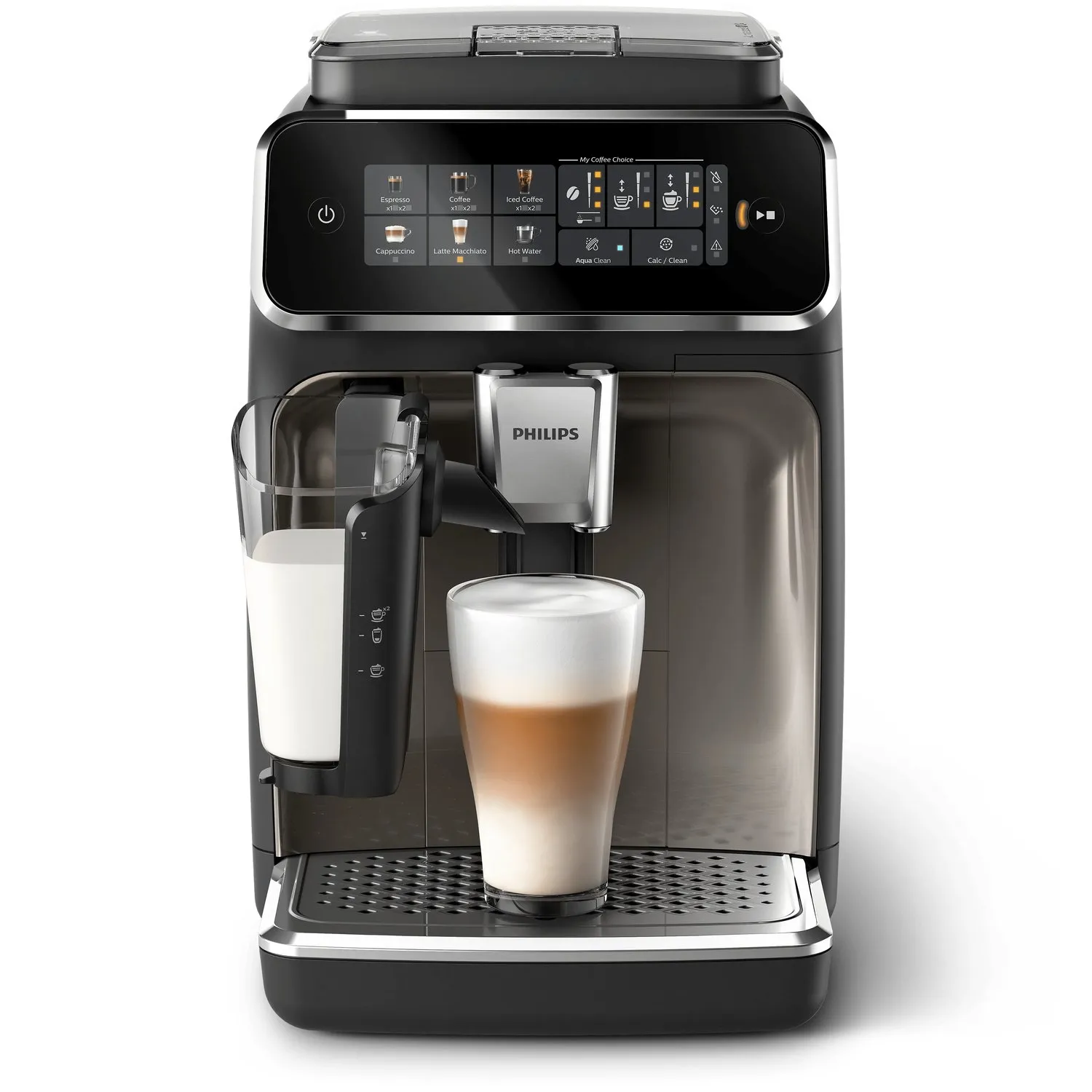
This is the biggest difference. The Philips offers six one-touch drinks,
including espresso, coffee, cappuccino, latte macchiato, iced coffee and
hot water, chosen on a simple touch display with colored icons. The Rivelia
lists more than 18 recipes, from cortado to latte, on a 3.5 inch color
touchscreen with animated guidance. It also saves preferences for four
people. If one or two people drink the same few drinks, the Philips menu is
all you need.
Milk system
The LatteGo is two plastic parts with no tubes, and Philips says it rinses
clean in about 10 seconds. The Rivelia’s LatteCrema Hot carafe has an
automatic cleaning cycle, works well with plant milks and can be stored in
the fridge between uses. Reviewers rate the Rivelia’s foam highly, though
Expert Reviews found its milk a little cooler than they liked. Cold foam
needs De’Longhi’s optional LatteCrema Cool upgrade on the Rivelia.
Beans and grinder
The Rivelia has two swappable bean hoppers, so you can keep a decaf or a
second roast ready without emptying the machine. Its Bean Adapt feature
suggests grind and temperature settings when you switch beans. The Philips
has a single 9.7 oz hopper and a ceramic grinder with 12 settings, which is
plenty for one everyday bean.
Water tank and noise
The Philips holds 60.9 oz of water against the Rivelia’s 47.3 oz. Expert
Reviews called the Rivelia’s tank small for a busy household, partly
because warm-up and rinse cycles use a lot of water. Philips says its
SilentBrew system is about 40 percent quieter than its earlier machines,
while reviewers describe the Rivelia as loud while grinding.
Descaling
The Philips comes with an AquaClean filter. Philips says that if you change
the filter when prompted, the machine can brew up to 5,000 cups before it
needs descaling. That saves a regular chore over the life of the machine.
What they share
Both machines grind whole beans, brew espresso and froth milk automatically
into your cup at the press of a button. Both use a carafe instead of a milk
tube, take up a similar width on the counter at just under 10 inches, and
cost far less per cup than pods. To compare them with budget and premium
Swiss machines, see
all our bean-to-cup machine picks.
Which one should you buy
Get the Philips 3300 LatteGo if you want great everyday coffee and milk
drinks with the least cleaning, a bigger water tank, a quieter machine and
the lower price.
Get the De’Longhi Rivelia if three or four people share the machine, you
want a wide menu of milk drinks, or you like switching between two beans
such as a regular roast and a decaf.
Frequently asked questions
Is the De’Longhi Rivelia worth it over the Philips 3300?
Only if you will use what it adds. The espresso is similar, so the extra
cost buys a larger menu, profiles and a second hopper. For one or two
people who drink a few favorites, the Philips is the better value.
Can the Philips 3300 LatteGo make iced coffee?
Yes. Iced coffee is one of its presets. You add ice to your glass and the
machine brews over it.
Which machine is easier to clean?
The Philips. The LatteGo has only two parts and no tubes, and the AquaClean
filter cuts down on descaling. The Rivelia’s carafe has an automatic
cleaning cycle, but it has more parts to take apart and wash.